Applications of Audio Frequency Generation
A tone generator synthesizes periodic electrical signals that loudspeaker voice coils convert into physical air pressure waves. Because the frequency can be tuned with single-Hertz precision, it serves numerous engineering and acoustic applications:
1. Speaker Enclosure & Diaphragm Resonance Testing
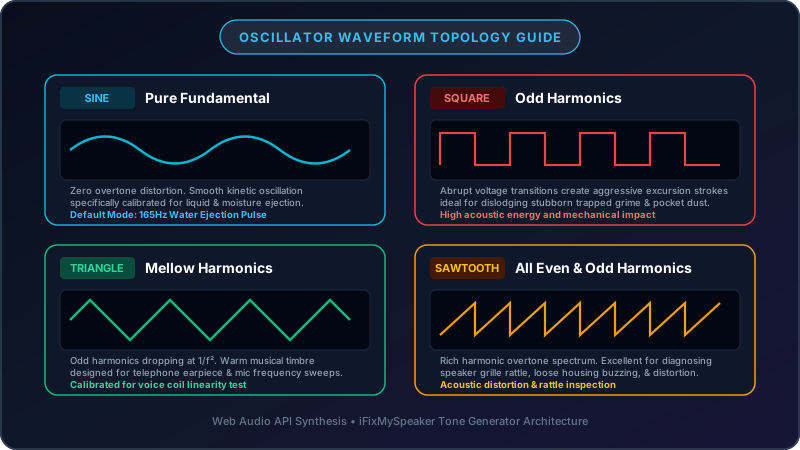
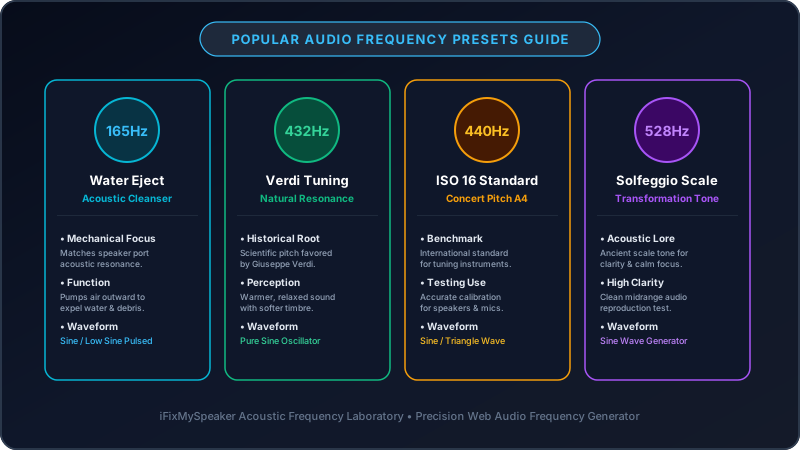
Every speaker cavity has a natural resonant frequency where air resistance drops and mechanical excursion peaks. In smartphones, this peak sits between 160Hz and 175Hz. That is why our Fix My Speaker Cleaner utilizes a 165Hz tone: it pushes the speaker cone to its farthest physical limits to eject water droplets without risking thermal burnout.
2. Musical Instrument Tuning: 440Hz vs 432Hz
The International Organization for Standardization (ISO 16) established 440Hz as the standard concert pitch for note A4 in 1955. However, historical acoustic tuning frequently utilized 432Hz (advocated by Italian composer Giuseppe Verdi), which some musicians consider warmer and more harmonious. Use our preset buttons above to compare the pitch difference side-by-side.
3. Hearing Range & Age Threshold Checks
A healthy infant ear can perceive frequencies from 20Hz to 20,000Hz. As human beings age, micro-cilia cells inside the inner ear cochlea degrade (a condition termed presbycusis):
- Under 25 years old: Typically perceive up to 17,000Hz–18,000Hz.
- Ages 25 to 45: Upper hearing threshold often drops to 14,000Hz–15,000Hz.
- Ages 50+: Sensitivity above 12,000Hz is commonly attenuated.
Safety Warning: When testing high frequencies (above 8,000Hz), always keep volume moderate. High frequencies carry intense concentrated energy that can cause hearing fatigue if played too loudly through earphones.
4. Tinnitus Sound Matching
Millions of people experience subjective tinnitus—a persistent ringing, buzzing, or whistling tone inside the ear. Audiologists use precision tone generators to pitch-match the patient's tinnitus frequency (often concentrated around 4,000Hz to 8,000Hz) to design targeted acoustic notch therapy filters.