How to Interpret Speaker Diagnostic Results
Acoustic diagnostics help isolate whether speaker defects stem from physical driver damage, liquid obstruction, debris contamination, or digital audio clipping. Follow this guide while running tests in the console above.
1. Identifying Channel Imbalance
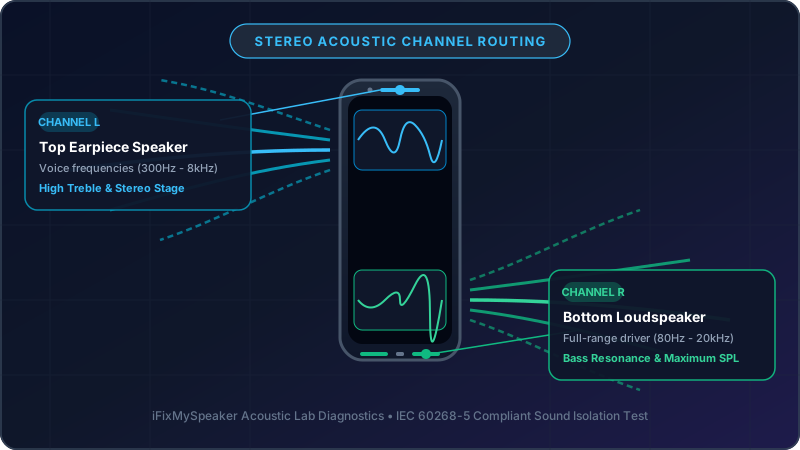
Modern mobile phones operate in stereo mode during landscape video playback and gaming, delegating the top earpiece as the left channel and the bottom ported loudspeaker as the right channel. When running the Left Only and Right Only tests:
- If one channel sounds noticeably lower in volume or lacks high frequencies, check for pocket lint or facial sebum covering that specific grille opening.
- If one channel is completely silent, check your operating system's Accessibility balance settings before assuming an internal amplifier failure.
2. Listening for Buzzing and Rattling During Frequency Sweeps
When running the 20Hz to 20,000Hz sweep, listen carefully as the pitch glides from deep bass to ultrasonic treble:
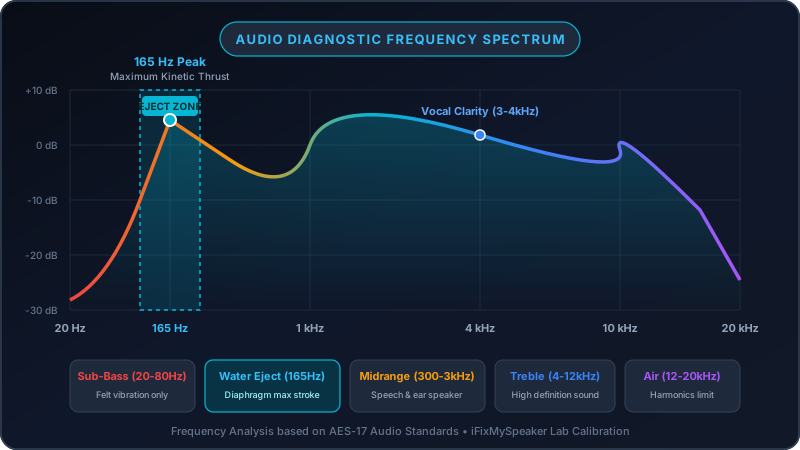
- Low-End Buzzing (40Hz to 180Hz): In micro-speakers, low bass generates large mechanical cone displacement. If you hear a vibrating buzzing sound, it indicates either dried water residue adhering to the diaphragm or loose lint vibrating in the acoustic chamber. Run our Water Eject Cleaner or Deep Clean Sound to clear it.
- Mid-Range Distortion (500Hz to 2,000Hz): A metallic buzz in speech frequencies typically signifies a warped or misaligned voice coil rubbing against the neodymium permanent magnet. This is hardware wear that requires replacement.
- High-Frequency Drop-off: Due to human ear anatomy and age, most adults lose sensitivity to frequencies above 15,000Hz. If a 10kHz tone sounds clear, your speaker's high-frequency transducer is healthy.
3. Why Pink Noise is Used for Acoustic Testing
Pink noise contains equal acoustic energy per octave (decaying at -3 dB per octave). Unlike pure sine tones that test single frequencies, pink noise exercises the entire speaker motor assembly uniformly without causing dangerous resonance spikes. Professional audio technicians use pink noise to burn in new transducers and inspect for loose enclosure rattles.
Need to Fix Trapped Water or Dirt?
If your test revealed muffled sound or crackling after moisture exposure, use our dedicated acoustic cleaning sound.
Eject Water with 165Hz →